Staying informed with the latest recession news has become essential in a world where economic shifts happen rapidly and unpredictably. Whether you’re a business owner, investor, employee, or simply someone who wants to safeguard personal finances, understanding recession signals helps you make smarter financial decisions. In this in-depth guide, we break down what recession really means, why it happens, and how the latest global indicators are shaping the economic outlook. Our goal is to provide a highly detailed, data-rich, and user-focused analysis that helps readers stay ahead of economic uncertainty.
Understanding Recession: What the Latest Recession News Tells Us
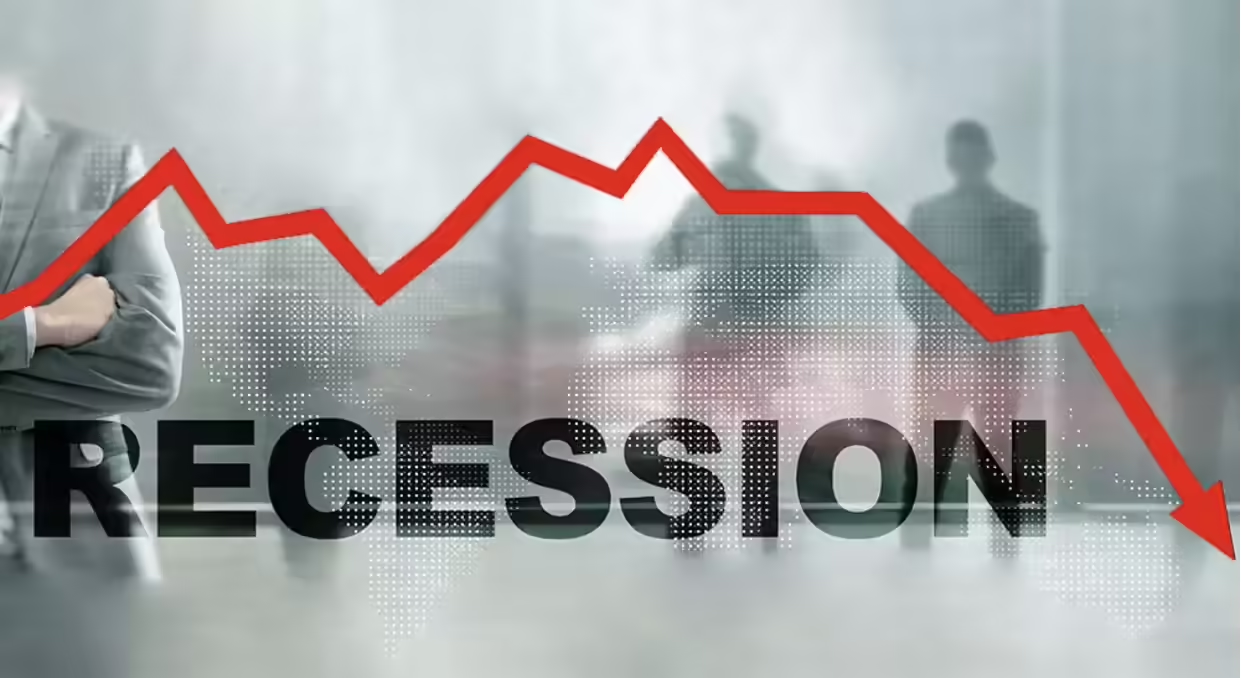
A recession occurs when economic activity significantly declines across the economy for an extended period—typically identified by two consecutive quarters of negative GDP growth. The latest recession news highlights concerns around inflation, rising interest rates, supply chain disruptions, and geopolitical tensions—all indicators that can push major economies toward slowdown.
Many global economies are observing early warning signs, including decreased consumer spending, tightening labor markets, and slower business investment. These patterns strongly align with historical recession trends and help experts predict possible downturns.
Global Economic Indicators Driving Recession News Today
Modern economies are interconnected, and financial distress in one region often triggers ripple effects worldwide. Current recession news consistently points to several global factors contributing to rising economic instability:
1. Persistent Inflation
Inflation remains one of the strongest predictors of recession. When prices remain high for too long, consumers reduce spending—a key driver of economic growth. Central banks respond by increasing interest rates, which, if too aggressive, may push economies closer to contraction.
2. Rising Interest Rates
To counter inflation, structured interest rate hikes have been introduced in the U.S., U.K., EU, and several developing markets. Higher borrowing costs slow down business investment and consumer lending, further fueling downturn fears seen in most recession news analyses.
3. Energy and Commodity Shortages
Geopolitical tensions have affected oil supply, gas imports, and food production. These shortages increase prices globally and make recession conditions more likely.
4. Declining Manufacturing Output
Reports indicate slower production cycles and decreased demand for durable goods. Manufacturing indexes in many countries are consistently below expansion territory, contributing heavily to global recession news alerts.
5. Stock Market Volatility
Frequent market fluctuations, reduced corporate earnings, and cautious investor behavior all reflect economic uncertainty. These indicators often appear in recession predictions and financial updates.
How Recession News Affects Businesses and Consumers
Understanding how the economy responds to looming downturns helps individuals and businesses prepare ahead of time. According to recent recession news, several sectors are already adjusting to the ongoing shifts.
Impact on Businesses
- Reduced consumer spending lowers revenue for retail, hospitality, and service industries.
- Higher interest rates increase financing costs for new investments or expansions.
- Supply chain issues create production delays and raise operational expenses.
- Layoffs and hiring freezes become common as companies try to conserve cash.
Impact on Consumers
- Higher living costs often reduce purchasing power.
- Job insecurity becomes a major concern during recessions.
- Loan and mortgage payments rise as interest rates increase.
- Savings decline due to reduced investment growth or higher spending needs.
The consistent theme across recession news articles is that preparation is crucial for protecting financial stability during uncertain times.
Industries Most Affected According to Recent Recession News
Certain industries experience sharper declines during economic downturns, while others remain relatively stable.
Industries Facing Higher Risks
- Retail and Luxury Goods: Consumers cut non-essential expenses first.
- Automotive: Car purchases drop significantly due to financial caution.
- Real Estate: Higher interest rates slow mortgage applications and property sales.
- Technology: Startups and large firms face funding shortages and restructuring.
Industries That Perform Better in Recessions
- Healthcare: Demand remains consistent regardless of economic conditions.
- Consumer Staples: Everyday products continue selling even during slowdowns.
- Repair and Maintenance Services: People choose repairs over new purchases.
- Discount Retailers: Families shift to budget-friendly shopping options.
These patterns outlined in recession news help predict which sectors will remain resilient and which may require long-term risk strategies.
How to Prepare Financially: Lessons from Current Recession News
Being proactive during early recession warnings can prevent major financial setbacks. Here are practical recommendations frequently highlighted in economic analyses:
1. Build an Emergency Fund
Aim for at least 3–6 months of living expenses. Recessions often bring sudden layoffs or income disruptions.
2. Reduce High-Interest Debt
Credit card and loan interest becomes more burdensome during economic slowdowns.
3. Reevaluate Investment Strategies
Economic uncertainty may require adjusting portfolios toward stable, recession-proof sectors.
4. Strengthen Skills and Career Stability
Upskilling increases job security when companies downsize.
5. Track Reliable Recession News Sources
Accurate and timely updates help individuals react quickly to changing conditions.
The Future Outlook: What Recession News Suggests for the Coming Years
Economists agree that the global financial landscape will continue facing volatility due to inflation cycles, geopolitical conflicts, and climate-related disruptions. While some regions may avoid full recession, many are likely to experience slow growth or temporary contractions.
Long-term recession news predictions point toward:
- Gradual stabilization after interest rates peak
- Increased reliance on renewable energy to reduce supply vulnerabilities
- Technological innovations driving productivity
- Shifts in global trade routes and manufacturing hubs
Despite ongoing concerns, strategic planning, economic restructuring, and stronger financial policies can help countries recover quickly and sustainably.
FAQs About Recession News
1. What is the meaning of recession in simple terms?
A recession is a period of declining economic activity, usually marked by lower spending, job losses, and negative GDP growth.
2. How can I stay updated on recession news?
You can follow trusted financial news platforms, government economic reports, and reputable economic analysts.
3. Are we heading toward a global recession?
Many indicators suggest economic slowdown, but the severity varies by region. Monitoring updated recession news helps track new developments.
4. Which jobs are safest during a recession?
Healthcare, education, maintenance, government roles, and essential services are generally more secure during downturns.
5. How long do recessions usually last?
Most recessions last between 6 to 18 months, though recovery can take longer depending on economic conditions.
Conclusion
Staying informed with authentic and detailed recession news is crucial for navigating uncertain economic climates. With global markets facing inflation, rising interest rates, supply chain barriers, and political instability, understanding these trends becomes essential for making informed personal and business decisions. By analyzing reliable data, interpreting financial signals, and preparing early, individuals and organizations can stay resilient through economic downturns. Remaining proactive and adaptable ensures that even during recession cycles, opportunities for growth and stability are still within reach.