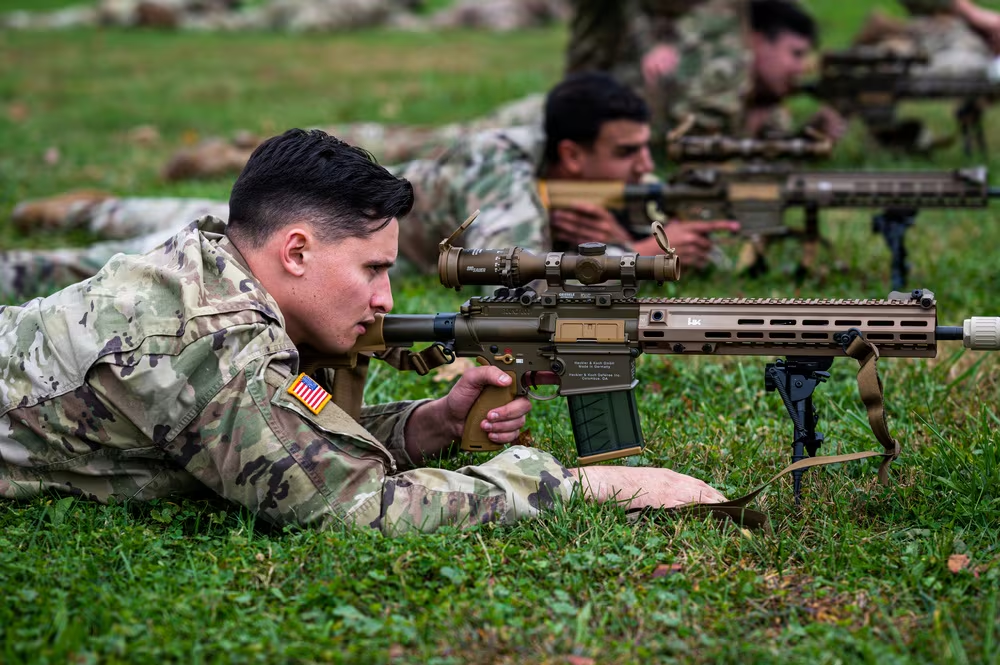
In the world of modern firearms, few weapons spark as much discussion as the DMR Rifle, also known as the Designated Marksman Rifle. Positioned between a standard infantry rifle and a high-precision sniper system, the DMR fills a unique tactical niche. It is accurate, versatile, semi-automatic (in most cases), and capable of reaching targets beyond standard assault rifle capability — yet it remains more mobile and rapid in fire than traditional sniper platforms. Because of this balance, DMR rifles are increasingly used in both military roles and civilian shooting sports.
What Is a DMR Rifle?
A Designated Marksman Rifle (DMR) is a firearm designed to provide accurate fire at medium to long ranges — typically 400 to 800 meters. It bridges the gap between standard service rifles and sniper rifles.
A simple definition:
A DMR is a precision rifle intended for marksmen in an infantry squad, offering greater range and accuracy than typical rifles while maintaining speed and maneuverability.
Unlike snipers who operate independently, a designated marksman fights with the unit, providing overwatch and precision fire support.
Why Are DMR Rifles Important?
DMRs exist because battlefield conditions require soldiers who can engage at distances beyond normal rifle capability without needing a dedicated sniper.
Key advantages of DMRs:
- Longer effective range
- Greater accuracy due to optics
- Quick follow-up shots
- Semi-automatic capability (in many designs)
- Engages moving targets rapidly
- Versatile ammunition options
DMRs allow squads to neutralize threats without repositioning entire units.
DMR vs Sniper Rifle vs Assault Rifle – What’s the Difference?
This is one of the most common questions. Each rifle type performs a distinct role.
| Feature | Assault Rifle | DMR Rifle | Sniper Rifle |
|---|---|---|---|
| Range | Short–Medium | Medium–Long | Long–Extreme |
| Fire Rate | Rapid | Semi-auto/Controlled | Slow/Precision |
| Accuracy | Moderate | High | Very High |
| Weight | Light | Medium | Heavy |
| Role | General infantry | Mid-range precision | Long-range elite specialist |
Simple way to understand:
- Assault Rifle: Fast and versatile, but less accurate long-range.
- DMR: Balanced — accuracy + speed + flexibility.
- Sniper Rifle: Extremely precise but slower, specialized.
DMR rifles bring precision inside squad range, not from a distant vantage point.
Core Features of a DMR Rifle
To classify a firearm as a DMR, several characteristics usually stand out:
Standard Features:
- Precision barrel (often heavier/longer)
- High-quality optics (variable or fixed scope)
- Semi-automatic capability
- Bipod or stabilizing support
- Enhanced trigger system
- Chambered for intermediate or full-power cartridges
- Durable for field combat use
Benefits for shooters:
✔ Quick follow-up shots
✔ Engages multiple targets without manual cycling
✔ Works in both defense and assault situations
History and Evolution of DMR Rifles
Although marksmen existed long before the term, the DMR concept gained prominence during 20th-century conflicts. Traditional battlefields required both accuracy and mobility. Sniper rifles were precise but slow, while standard rifles lacked long-distance effectiveness.
Evolution timeline (short overview):
- World War II: Marksmen used scoped bolt-action rifles.
- Cold War Era: Semi-auto battle rifles like M14 emerged.
- Modern Warfare: Lightweight optics-based rifles introduced.
- Today: DMRs are standard for tactical units worldwide.
The world realized — a hybrid precision rifle was necessary.
Popular Calibers Used in DMR Rifles
DMRs are chambered in various calibers depending on mission type.
Common calibers include:
- 5.56×45mm NATO
- 7.62×51mm NATO
- .308 Winchester
- 6.5mm Creedmoor
- 7.62×39mm
Larger calibers provide more stopping power but increase recoil.
Top DMR Rifles (Widely Recognized Models)
While new rifles appear regularly, some models have earned legendary status.
1. Mk 12 SPR
Used by U.S. SOCOM — accurate, reliable, lightweight.
2. M14 EBR
Modernized version of classic M14, known for power and reach.
3. HK417
German engineering, used by multiple special forces units.
4. SR-25
Semi-auto precision rifle, smooth shooting and reliable.
5. Dragunov SVD
Historic and iconic, recognized for long-range battle use.
6. FN SCAR-H DMR
Modular design, adjustable, tactical powerhouse.
Each DMR has its unique handling, feel, and field performance.
What Makes a Good DMR Rifle?
Not every rifle can become a DMR. Certain qualities matter most:
Important factors:
- Accuracy under long-range fire
- Reliable semi-auto operation
- Good optic compatibility
- Comfortable ergonomics
- Adjustable stock for stability
- Heat-resistant barrel under sustained fire
Additional desirable features:
- Light recoil for follow-up shots
- Easy maintenance
- Strong aftermarket support
Whether for field combat or sport shooting, consistency wins.
Advantages and Disadvantages of DMR Rifles
No weapon is perfect — balance matters.
Pros:
- Longer range than standard rifles
- Fast firing compared to bolt-action
- Ideal for tactical and defensive roles
- Great for patrol and support operations
- Works in open and urban terrain
Cons:
- Heavier than assault rifles
- Requires training to use effectively
- Optics need maintenance
- Recoil may increase with larger calibers
However, for many, the advantages outweigh the drawbacks.
DMR Use in Civilian Shooting and Sports
DMRs are not just for military professionals. Civilian interest is growing rapidly.
Popular uses:
- Competitive shooting
- Long-range target practice
- Hunting medium to large game (where legal)
- Collecting and historical interest
Enthusiasts like the balance of reach and control.
How DMR Rifles Are Used on the Battlefield
The designated marksman role is mission critical.
Responsibilities of a Designated Marksman:
- Engage mid/long-range threats
- Provide overwatch for moving squads
- Neutralize enemy marksmen
- Support suppression fire when needed
- Improve overall unit combat reach
DMRs extend battlefield eyes and firepower.
DMR Setup Breakdown (General Overview, Non-Instructive)
A typical DMR build involves:
- Quality optic sight
- Sturdy bipod
- Extended or heavy barrel
- Adjustable stock
- Tactical sling
- Suppressor (if mission required)
Note: This is a descriptive overview, not a guide for weapon modification.
DMR vs Battle Rifle – Quick Comparison
Not the same, though sometimes similar.
- Battle rifles use heavier full-power cartridges.
- DMRs focus on precision + optics + stability.
A DMR may start as a battle rifle platform and get modified for accuracy.
Why DMR Rifles Rank Well in Searches
Topics involving tactical equipment perform strongly because:
✔ High interest in military technology
✔ Popular among firearm enthusiasts
✔ Great for SEO keywords like “rifle, DMR, tactical, marksman”
✔ Evergreen topic — always relevant
Good for guest posting, blogs, and niche authority sites.
Frequently Asked Questions About DMR Rifles
Q1: What is the primary role of a DMR rifle?
To provide accurate mid-to-long range fire support in a squad.
Q2: Is a DMR better than a sniper rifle?
Not better — just different. Snipers work at extreme range; DMR suits fast battlefield response.
Q3: Are DMR rifles fully automatic?
Most operate semi-automatically for accuracy balance.
Q4: Can civilians own DMR rifles?
Depends on region laws and regulations — always follow legal requirements.
Conclusion – The Significance of DMR Rifles in Modern Firearms
The DMR rifle stands as one of the most versatile weapons in modern combat and sport shooting. It bridges a critical gap — offering the accuracy of a precision firearm without sacrificing the speed and mobility of an assault rifle. Its role has evolved over decades, and today the DMR is recognized as an essential tool for squads needing flexible firepower.
Whether used in military tactical operations, competitive shooting environments, or as part of firearm research discussions, DMR rifles inspire deep interest. Their design, performance, historical importance, and adaptability make them a standout topic for enthusiasts and article readers alike.