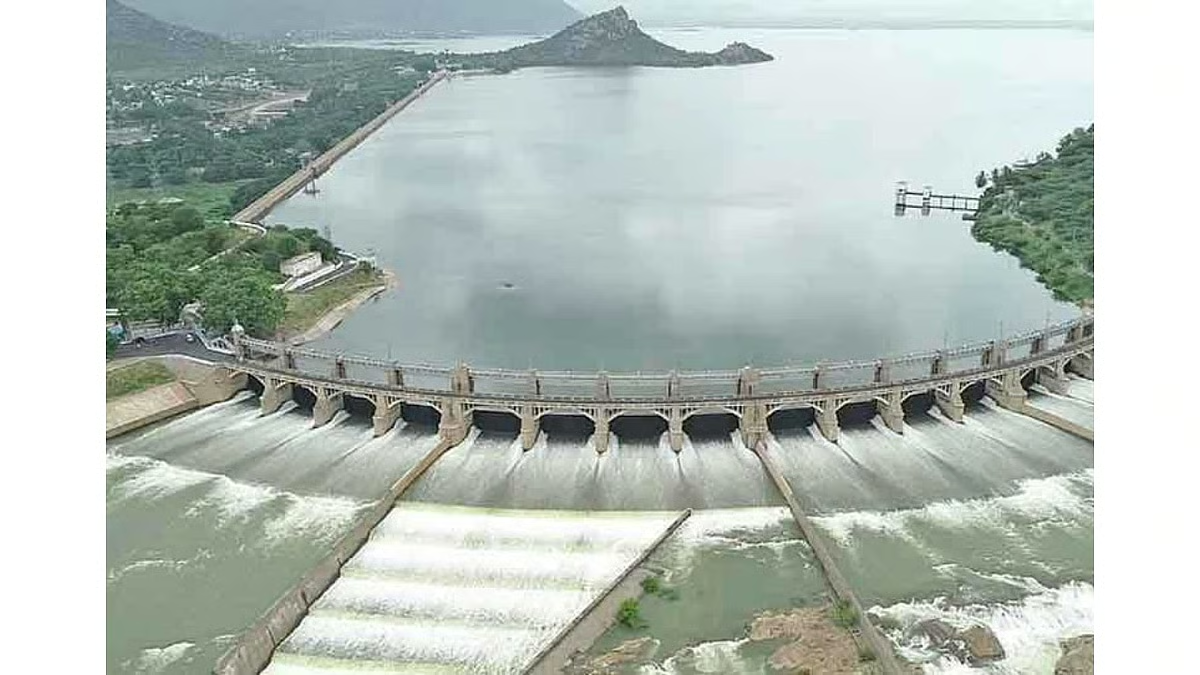
In the heart of the Salem district, where the sacred Cauvery River descends from the rugged hills and spills into the plains of Tamil Nadu, stands an engineering marvel that has defined the region’s prosperity for nearly a century. The Mettur Dam, also known as the Stanley Reservoir, is not just a massive structure of stone and mortar; it is the beating heart of the state’s agriculture, a pillar of its power grid, and a sanctuary for weary travelers.
As we move through 2025, the Mettur Dam remains more relevant than ever. Following a historic year in 2025 where the dam reached its Full Reservoir Level (FRL) a record seven times, interest in this “Rice Bowl” architect has surged. In this deep dive, we explore everything from its colonial-era origins to the best local fish fry you must try during your visit.
1. The History and Construction: A Century-Long Vision
The story of Mettur Dam is a tale of perseverance. While the project was complete in 1934, its roots trace back as far as 1834. The need for a stable water source for the Tanjore delta led to nearly a century of diplomatic negotiations and engineering surveys.
The British Engineering Legacy
The dam was design by the visionary British engineer Mr. Ellis and construct under the supervision of Sir George Stanley, the then-Governor of Madras (after whom the reservoir is named).
- Construction Period: 1925 – 1934 (9 years).
- Workforce: Over 17,000 workers labored to create what was, at the time of its completion, the largest dam in the world.
- Architecture: It is a masonry gravity dam, meaning it relies solely on its immense weight to hold back the force of the Cauvery.
The Submerged Villages and Nayambadi
Building a reservoir of this magnitude (spanning 15,540 hectares) came at a human cost. The village of Nayambadi was entirely submerge. Today, when the water levels recede during lean summers, the “ghosts” of the past emerge: an ancient Hindu temple, a church, and even the palace of Tipu Sultan can be seen rising from the mud—a hauntingly beautiful sight for history buffs.
2. Technical Specifications: The Power of 93.47 TMC
For those tracking Mettur Dam water levels, understanding the capacity is vital for predicting agricultural output in the Delta districts.
| Feature | Specification |
| Full Reservoir Level (FRL) | 120 Feet |
| Total Storage Capacity | 93.47 TMC (Thousand Million Cubic Feet) |
| Dam Height | 214 Feet (Maximum) |
| Dam Length | 1,700 Meters (5,600 Feet) |
| Irrigation Reach | 271,000+ Acres |
| Catchment Area | 16,300 Square Miles |
The “Seven Times Full” Phenomenon of 2025
The year 2025 became a milestone in the dam’s history. Due to unprecedented rainfall and upstream releases from Karnataka’s KRS and Kabini dams, Mettur reached its 120-foot capacity seven times in a single year. This matched a record set way back in 1977, highlighting the shifting climatic patterns and the dam’s crucial role in flood management.
3. Beyond Water: The Hydroelectric and Thermal Hub
Mettur is often called the “Power House” of Tamil Nadu. The dam is integrated with several power projects that keep the state’s industries running.
- Stanley Hydro Power House: Located at the base of the dam, this plant utilizes the rushing water to generate up to 240 MW of clean energy.
- Thermal Power Stations: Nearby Mettur Thermal Power Station adds another layer to the region’s energy contribution, though the hydroelectric side remains the “greener” pride of the district.
4. Tourism Guide: What to See and Do
If you are planning a weekend trip from Salem, Coimbatore, or Erode, Mettur Dam offers a serene escape from the urban hustle.
A. Ellis Park
Located right at the foot of the dam, Ellis Park is a beautifully maintained garden featuring lush lawns, children’s play areas, and rhythmic fountains. It is the perfect spot for a family picnic.
- Timings: 9:00 AM to 5:00 PM.
- Vibe: Tranquil, green, and perfect for sunset photography.
B. The Muniappan Statue
Near the dam stands a giant statue of Lord Muniappan (Aiyanar). This deity is considered the guardian of the region, and locals often offer prayers here for a bountiful harvest and the safety of the dam.
C. Boating in the Reservoir
When the water levels are safe, local boatmen offer coracle (round boat) rides. Gliding across the vast expanse of the Stanley Reservoir with the hills of the Eastern Ghats in the background is a surreal experience.
D. The Mettur Fish Fry
You cannot visit Mettur without trying the local delicacy. The reservoir is home to a variety of fresh-water fish (Catla, Rohu, and Mrigal). Numerous small eateries near the park serve spicy, deep-fried fish that is famous across the state. It is the ultimate street food experience for non-vegetarians.
5. Nearby Attractions: Extending Your Trip
Mettur is a gateway to several other scenic spots in North-Western Tamil Nadu.
- Hogenakkal Falls (50 km): Known as the “Niagara of India,” these falls are located upstream on the same Cauvery River.
- Yercaud (85 km): A charming hill station in the Shevaroy Hills, perfect for a cool retreat after visiting the dam.
- Kolli Hills: Famous for its 70 hair-pin bends and the Agaya Gangai waterfalls, it’s a paradise for bikers and trekkers.
6. How to Reach Mettur Dam
Mettur is well-connect by road and rail, making it an easy day-trip destination.
- By Road: It is roughly 50 km from Salem and 35 km from Erode. Regular TNSTC buses ply from Salem Central Bus Stand.
- By Train: The Mettur Dam Railway Station (MTDM) connects to Salem Junction. From Salem, you can catch trains to Chennai, Bangalore, and Kerala.
- By Air: The nearest airport is Salem Airport (SXV), about 45 km away, or the more well-connected Coimbatore International Airport (CJB), about 145 km away.
7. Best Time to Visit
The “best” time depends on what you want to see:
- For the “Full” View: Visit during the Monsoon (July to September) or early post-monsoon. Seeing the 16-vent surplus sluices open is a majestic, roaring sight.
- For Sightseeing: The winter months of October to February offer pleasant weather (20°C to 30°C), ideal for exploring the park and boating.
- For History: The Summer (April to June) is when the water level drops, revealing the submerged temples and old Nayambadi structures.
8. Environmental and Political Significance: The Cauvery Dispute
One cannot discuss Mettur Dam without mentioning the Cauvery Water Dispute. As the primary reservoir for Tamil Nadu, Mettur’s inflow is entirely dependent on the releases from Karnataka. During years of drought, the dam often hits “dead storage” levels, leading to agricultural distress in the delta. This makes the dam a symbol of both regional pride and political sensitivity.
9. Frequently Asked Questions (FAQ)
Can we walk on top of Mettur Dam?
Generally, walking on top of the main dam structure is restricted for security reasons. However, there are designated viewpoints and the park area provides an excellent perspective of the dam’s grandeur.
Is there an entry fee for Mettur Dam Park?
Yes, there is a nominal entry fee (usually around ₹5 to ₹10) for the park. Camera charges may be extra.
Is it safe to swim in the reservoir?
No. The reservoir has deep silt and unpredictable currents. Visitors are strictly advised to stay within designated boating areas and avoid swimming.
Are there good hotels in Mettur?
Mettur has basic lodges and guesthouses. For luxury accommodation, it is better to stay in Salem and make a day trip to the dam.
Conclusion: A Monument to Human Ingenuity
The Mettur Dam is more than just a barrier of stone; it is the silent guardian of Tamil Nadu’s food security. Whether you are an engineering student marveling at the masonry gravity design, a historian looking for submerged secrets, or a traveler seeking a quiet afternoon by the water, Mettur Dam never disappoints.
As the sun sets over the Stanley Reservoir, painting the water in hues of orange and gold, one realizes the truth of the local saying: “As long as Mettur is full, the kitchens of Tamil Nadu will never go cold.”