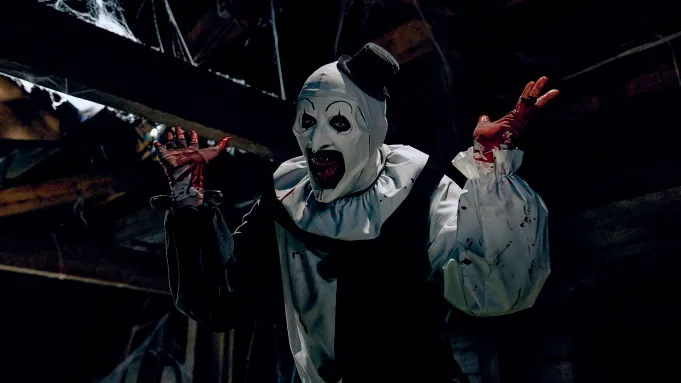
In the world of horror, few characters have risen from obscurity to cult fame as quickly and as brutally as Art the Clown. Dressed in his eerie black-and-white clown suit, with exaggerated makeup and a grin that feels carved from nightmares, Art has become one of the most disturbing villains of modern cinema. He represents the new wave of independent horror — raw, fearless, and unfiltered.
While most horror icons like Freddy Krueger or Michael Myers emerged from major studios, Art the Clown was born in the underground horror scene and climbed his way up through sheer shock value, creative storytelling, and unforgettable visuals. His rise from short films to full-length features mirrors the growing influence of independent filmmakers who dare to take risks that mainstream horror often avoids.
The Origins of Art the Clown
Art first appeared in Damien Leone’s short film “The 9th Circle” (2008). Even though his screen time was limited, the character instantly stood out. He wasn’t a talkative killer or a supernatural entity with clear motives. He was a silent predator, unpredictable and deeply unsettling.
Leone saw potential in Art’s disturbing presence and brought him back in the 2011 anthology “Terrifier”, where he once again tormented his victims with a combination of sadistic creativity and eerie silence. The audience reaction was strong — many horror fans were shocked, disturbed, and fascinated all at once. This reaction convinced Leone that Art could carry his own full-length movie.
That decision gave birth to “Terrifier” (2016), the film that would define Art the Clown as one of horror’s most twisted icons.
The Terrifier Series: A New Kind of Horror
“Terrifier” was produced on a small budget but didn’t hold back in any way. It was violent, relentless, and visually extreme. Played by David Howard Thornton, Art became a nightmare that audiences couldn’t look away from. His mime-like movements, playful mockery, and brutal kills created a unique blend of dark humor and pure horror.
Unlike other killers who have backstories or moral reasoning, Art operates without motive or emotion. His killings are senseless and theatrical, which makes him far more disturbing. He laughs without sound, communicates through facial expressions, and treats murder like a performance.
The makeup design also deserves praise. His blackened teeth, white-painted skin, and hollow eyes make him look like a ghostly jester — something both absurd and horrifying. He embodies chaos and cruelty in equal measure.
The film’s practical effects and gore became talking points in horror circles. While mainstream films were relying more on digital effects, “Terrifier” went old-school, using makeup and prosthetics for gruesome realism. This hands-on approach gave the film a gritty authenticity that appealed to hardcore horror fans.
Terrifier 2 and the Rise of a Cult Legend
When “Terrifier 2” released in 2022, it took the horror world by storm. The film was bigger, bloodier, and more ambitious in every way. Damien Leone had a larger budget this time and used it to expand Art’s universe while keeping the raw intensity that fans loved.
The story introduced new characters, particularly Sienna Shaw, played by Lauren LaVera, who became a strong final girl capable of standing toe-to-toe with Art. The movie pushed boundaries of gore and violence, to the point where reports emerged of audience members fainting or vomiting during screenings. Rather than harming its reputation, this publicity only fueled curiosity.
What made “Terrifier 2” special was how it balanced extreme horror with a surreal, almost mythic tone. Art seemed less like a man and more like a supernatural force. The inclusion of mysterious dream sequences and hints about Art’s otherworldly nature added depth to his character, without ever explaining too much.
The movie’s success was a huge win for independent cinema. Made on a modest budget, it went on to earn millions, proving that audiences still crave original horror that feels dangerous and unpredictable.
The Psychology Behind Art the Clown
One of the reasons Art is so terrifying is his lack of humanity. Traditional horror villains often have motives rooted in revenge, trauma, or greed. Art, on the other hand, kills purely for amusement. He seems to take childlike joy in cruelty, making his acts even harder to digest.
His silence is also crucial. Without dialogue, every emotion he conveys comes through exaggerated expressions, body language, and sudden bursts of violence. This makes him unpredictable — one moment he’s standing still like a statue, the next he’s dismembering someone with theatrical flair.
There’s also a strange artistry to his violence. Every act feels planned like a twisted performance. This theme of performance mirrors the audience’s relationship with horror itself — we watch because we’re fascinated by what we fear. Art the Clown becomes both the entertainer and the monster, forcing viewers to confront their own attraction to horror.
The Cultural Impact of Art the Clown
In an era where horror often plays it safe, Art the Clown is a bold reminder of what the genre can be when filmmakers push boundaries. He has become a modern horror icon, joining the ranks of characters like Jason Voorhees and Pennywise the Dancing Clown. Yet, he stands apart because he doesn’t belong to a major franchise.
His popularity grew mostly through word of mouth and online fandoms, especially among horror communities that thrive on discovering underground hits. Cosplayers began dressing as Art at conventions, and fan art flooded social media. The imagery of a black-and-white clown with a blood-soaked smile has become instantly recognizable.
Even those who haven’t seen the “Terrifier” films know who Art the Clown is — a testament to how effective his design and performance are.
Damien Leone’s Vision and Legacy
Director Damien Leone deserves immense credit for crafting a character that feels both classic and original. His approach to horror respects the roots of the genre while refusing to compromise. Leone’s decision to use practical effects, dark humor, and bold cinematography gives his films a unique identity.
The upcoming “Terrifier 3,” already in production, is expected to push boundaries even further. Early teasers suggest a Christmas-themed horror setting — a twisted contrast between holiday cheer and brutal carnage. Fans are anticipating it not just for the gore, but for how Leone continues to evolve the mythology around Art the Clown.
Why Art the Clown Resonates with Modern Audiences
Part of Art’s success comes from timing. Audiences today are saturated with predictable horror tropes and overused CGI. Independent films like “Terrifier” feel refreshing because they return to raw creativity and risk-taking.
Art represents a kind of purity in horror — unfiltered, unapologetic, and completely unpredictable. He’s not trying to be relatable or sympathetic. He exists solely to terrify, and in doing so, he embodies the primal fear that horror was built on.
For fans, he’s also a symbol of rebellion. Supporting Art the Clown means supporting indie horror, creativity, and filmmakers who refuse to follow the mainstream formula.
The Future of Art the Clown
With the third film on the way and a dedicated fanbase, Art’s future in horror looks solid. There’s already speculation about spin-offs, prequels, and even potential crossover films. However, Damien Leone has made it clear that he values quality over quantity.
If future installments maintain the same balance of shock, style, and storytelling, Art could easily become the most iconic horror villain of this generation.
Conclusion
Art the Clown is more than just a killer in a clown suit — he’s a phenomenon that has reshaped modern horror. Through Damien Leone’s vision and David Howard Thornton’s chilling performance, Art embodies the darkest parts of human imagination. His silence screams louder than words, and his presence lingers long after the screen fades to black.
From a small indie short to a global cult icon, Art the Clown’s journey proves that horror doesn’t need massive budgets or big studios to make an impact. It only needs creativity, courage, and a willingness to face what truly terrifies us.