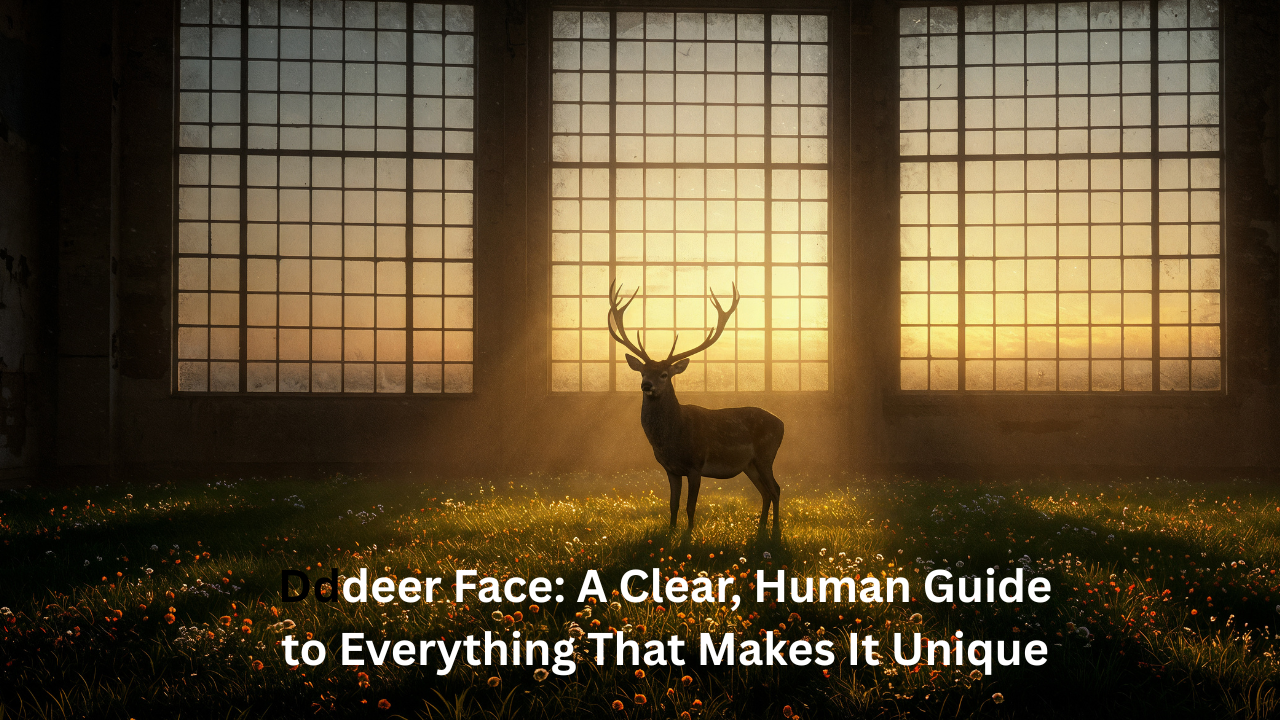
People have admired the deer face for centuries because it carries a mix of innocence, alertness, and beauty that few animals match. When you look at a deer carefully, the first thing you notice is the expression. The wide eyes, the soft fur, the slim muzzle, and the attentive ears create a look that feels peaceful yet sharp.
This guide breaks down what makes the deer face so special. It moves from anatomy to expression, from real wildlife behavior to art and makeup, and from practical hunting knowledge to creative uses like painting, drawing, and costume design. The goal is to help you understand the full picture in a simple way.
The Basics Of A Deer Face
A deer’s face has four features that shape its entire look:
- Large, sideways-set eyes
- A narrow muzzle
- A slightly rounded forehead
- Long, mobile ears
These parts work together. The eyes give the deer a wide field of vision. The muzzle helps with scent. The ears catch sound from surprising distances. Together, these features allow the deer to survive in forests, plains, and even dense brush.
When you watch a deer from the front, the face appears calm. When you watch from the side, you can see how long the muzzle is and how the ears angle to catch sound. Each angle tells a different story.
How A Close-Up Deer Face Reveals Hidden Details
A close-up deer face shows more than you expect. You can spot the texture of the fur, the shape of the nostrils, and even how the eyelashes curve upward. Photographers often say that a close view shows emotion. Hunters say it shows age and health. Artists say it shows personality.
I once met a wildlife painter who said she could tell when a deer felt nervous by the way its eyelid lifted slightly. At the time, it sounded like an exaggeration. After watching the deer for a while, I understood. The eyes really do shift with mood.
Deer Face Anatomy Explained Simply
To understand the deer’s face anatomy, focus on these main parts:
- Eyes: Wide placement for a 300-degree field of view.
- Nose: Moist, sensitive, and excellent for scent detection.
- Lachrymal glands: Small openings near the eyes used for scent marking in some species.
- Jawline: Slim and built for chewing tough plants.
- Ears: Mobile and able to rotate quickly toward sound.
Together, these features help the deer stay aware of danger while browsing, resting, or caring for young.
Deer Face Features That Stand Out
Some of the clearest deer face features include:
- A soft bridge of the nose
- A dark, shiny nose tip
- Light fur around the eyes
- A white or cream patch around the mouth
- Slight differences in color depending on species
Each detail plays a role in survival. Even the simple white markings help fawns blend into light patches in the forest.
Understanding Deer Face Markings
Different species have recognizable deer face markings. Whitetail deer usually have brighter light patches under the chin. Mule deer have darker masks. Blacktail deer carry deeper brow lines. Axis deer show neat patterns that make them easy to identify.
If you look closely, the markings are not random. They help deer communicate and stay hidden.
Front And Side Views Of The Deer Face
A deer’s front view looks symmetrical and peaceful. A deer’s face side profile looks longer and more alert. Photographers often choose one angle over the other depending on the mood they want to capture. A front view feels friendly. A side view feels wild and cautious.
Baby Deer Face Features And Why They Look So Cute
A baby deer’s face triggers that natural caring response humans have toward young animals. Fawns have:
These traits are universal signs of youth that humans instinctively find adorable.
Once, during a forest walk, I found a fawn resting alone in tall grass. Its mother was nearby. The tiny face looking back at me had an innocence I will never forget.
Baby Deer Face Close Up: What Changes With Age
A baby deer’s face, close up, shows how different fawns are from adults. The head looks rounder, the ears seem oversized, and the expressions appear pure. As deer age, the face grows longer, the fur deepens in color, and the eyes begin to reflect experience.
How Deer Faces Change As They Age
The deer face by age shifts slowly:
- Newborns have soft shapes and downy fur.
- Young deer stretch out their muzzle and foreheads.
- Adults show sharper lines and clearer markings.
- Older deer may develop gray patches or loose skin.
Age is easier to see once you know these patterns.
Angry Deer Face Signs To Watch For
An angry deer face is very different from the calm look we usually imagine. Warning signs include:
- Ears pinned back
- Tight lips
- Raised fur
- Flared nostrils
During rut season, bucks show these expressions often. If you see this face in the wild, give the deer space.
Deer Face Problems: Swelling, Tumors, And Growths
Deer can experience health issues that show on the face.
Abscess on Deer Face
Looks like a swollen pocket under the skin, often caused by wounds.
Deer Face Tumor
Unusual growths may distort the natural shape of the face.
Black Spots on Deer Face
Most spots are natural markings, but some come from ticks or minor infections.
Growth on Deer Face
Warts appear sometimes, especially with viral infections.
Hunters and wildlife experts monitor these conditions to understand population health.
Special Glands In Certain Species
Muntjac Deer Face Glands
Muntjac deer have strong scent glands under the eyes. When these glands open, they look like small slits or muntjac deer face holes. These are normal and used for marking territory.
Different Species, Different Faces
Axis Deer Face
Slim, neat features with soft reddish tones.
Whitetail Deer Face
Long, narrow, and expressive.
Mule Deer Face
Broader with large ears.
Blacktail Deer Face
Compact with darker markings.
Albino Deer Face
Very rare, often with pink eyes and pale fur.
Chubby Deer Face
Some deer develop fuller cheeks due to winter fat or genetics.
Cute Deer Face And Why People Love It
The cute deer face pulls people in with gentle curves and big eyes. Social media often shares photos labeled “cute deer face” because viewers connect instantly with the peaceful expression.
Cartoon Deer Face: How Artists Simplify Real Traits
When artists draw a cartoon deer face, they enlarge the eyes, soften the jaw, and reduce detail. These changes heighten emotion and charm.
If you have ever seen classic animated deer, you already know how soft and expressive cartoon adaptations can be.
How To Draw A Deer Face: Easy And Realistic Steps
Deer Face Drawing Easy: Step By Step
- Draw a large oval for the head.
- Add two tall ears at angles.
- Sketch two big eyes spaced wide apart.
- Add a small triangular nose.
- Outline the muzzle.
- Add simple shading.
Deer Face Drawing Realistic
- Start with accurate proportions.
- Use reference photos.
- Add layers of fur texture.
- Shade the nose and eye reflections carefully.
Artists who draw wildlife often practice deer faces first because the shapes are clean and expressive.
Deer Face Emoji And Other Digital Uses
The deer face emoji symbolizes calmness, nature, innocence, or being caught by surprise. It appears often in nature posts and playful messages.
The deer face meme goes viral whenever a deer makes a funny or shocked expression on camera. These usually show wide eyes and raised ears.
Deer Face Makeup And Paint Ideas
Deer Face Halloween Makeup
A popular trend uses brown shades, white dots on the cheeks, and a black button nose.
Baby Deer Face Makeup
This version softens the lines and adds gentle highlights.
Adult Deer Face Paint
Adults often choose more dramatic shading or fine-line details around the eyes.
Deer Face Mask And Creative Crafts
A deer face mask can be realistic, cute, or stylized. Many use it for theater, Halloween, or kids’ playtime.
A deer face cookie is a fun holiday snack shaped with a brown base, simple eyes, and sometimes a red nose for a festive twist.
Deer Face Tattoo And Art
A deer face tattoo symbolizes intuition, awareness, and gentle strength. Artists use clean lines and symmetry to keep it centered and balanced.
Deer face art appears in wall prints, nursery decor, and nature illustrations.
A deer face logo often uses minimal lines, making it bold and recognizable.
Deer Face With Antlers And Its Meaning
A deer face with antlers combines calm expression with symbols of leadership and maturity. People often associate it with wisdom and quiet strength.
Do Deer Recognize Faces?
Studies suggest deer recognize faces, especially human ones they encounter often. They notice patterns, shapes, and movements.
Can Deer See Your Face?
Yes. Deer see well enough to detect details, although they rely more on motion than clarity.
Can Deer Smell Face Paint?
Yes. Unless face paint is scent-free, deer may detect the smell from far away.
Hunting Knowledge: Face Paint, Face Masks, And Angles
Best Face Paint for Deer Hunting
Scent-free, matte, and easy to blend.
Best Face Mask for Deer Hunting
Light, quiet fabric that covers skin shine.
Best Direction to Face Deer Camera
Aim along natural trails or feeding paths.
Best Direction to Face Deer Stand
Keep it downwind of where deer travel.
These small decisions can shape your success in the field.
Final Thoughts
The deer face is more than a simple set of features. It carries emotion, survival instincts, and a beauty that artists and wildlife lovers admire. From makeup ideas to wildlife behavior, from drawing guides to biological details, understanding the deer face opens a window into the life of one of nature’s most graceful animals.