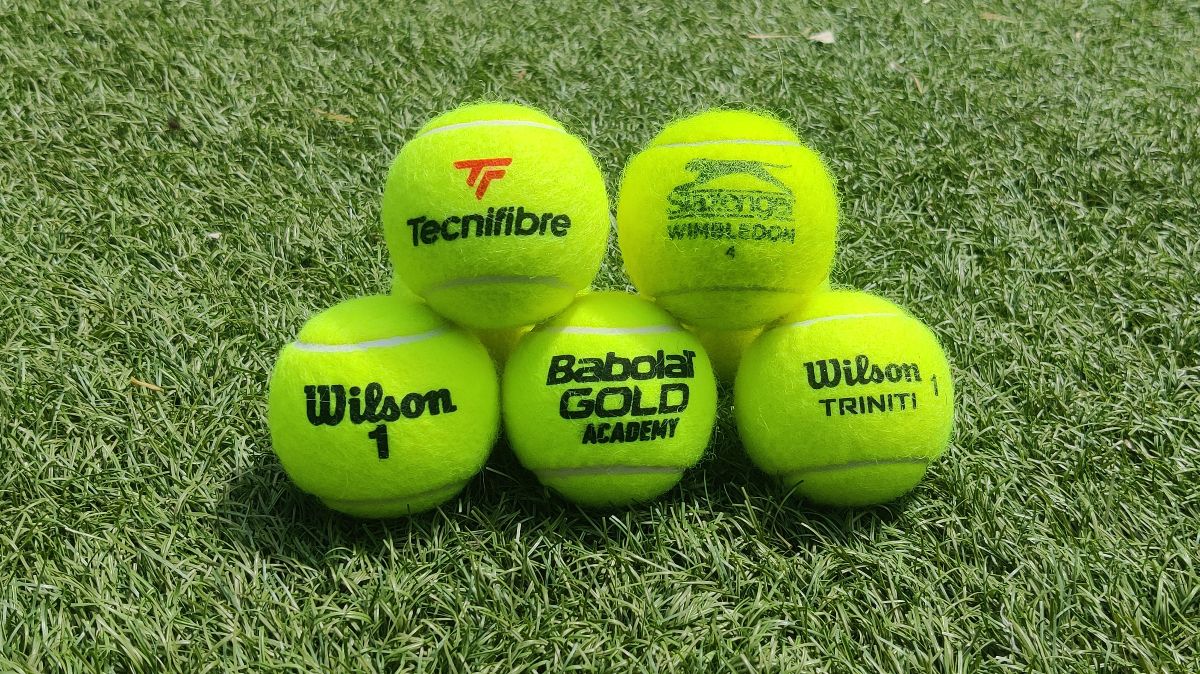
When you think of tennis, the first image that probably comes to mind is a fuzzy yellow tennis ball flying across the court. But here’s something most players don’t realize — not all tennis balls are created equal. The type of ball you use can completely transform your game, affecting your control, bounce, and overall performance.
Whether you’re a beginner learning to rally, a weekend player practicing your serve, or a seasoned competitor chasing your next title, choosing the best tennis ball for your level and playing conditions is essential.
Understanding What Makes Up a Tennis Ball
At first glance, most tennis balls look identical — round, fuzzy, and bright yellow. Yet, each one performs differently due to its construction and materials.
Every tennis ball is made of two main components:
- Rubber Core – This determines the ball’s bounce, speed, and pressure.
- Felt Covering – The fuzzy outer layer (a mix of wool and synthetic fibers) that influences how the ball travels through the air and reacts on the court.
The way these two materials interact defines a ball’s spin, durability, and playability.
A coach once said, “Switching to a new tennis ball felt like changing my racket — the entire rhythm of my game shifted.” And that’s true. The right ball makes your shots feel smooth and controlled; the wrong one can throw you off completely.
The Two Main Types of Tennis Balls
There are two primary categories every player should understand: pressurized tennis balls and pressureless tennis balls. Each has unique benefits and drawbacks depending on your goals.
1. Pressurized Tennis Balls
These are the traditional yellow balls used by professionals in major tournaments like Wimbledon, the US Open, and the Australian Open.
They’re filled with compressed air or nitrogen, giving them a lively bounce and a light, responsive feel.
Benefits
- Higher bounce and better spin potential
- Lightweight, making them faster off the racket
- Preferred for professional and competitive play
Drawbacks
- Lose internal pressure over time
- Shorter lifespan compared to pressureless balls
Best For
- Competitive matches, tournaments, and advanced players
Pro anecdote: Many players love that satisfying “pop” sound when they first open a can of new pressurized tennis balls — it’s the sound of energy and excitement before every match!
2. Pressureless Tennis Balls
Pressureless tennis balls don’t rely on internal gas pressure. Instead, their solid rubber core provides consistent bounce, even after months of use.
These balls are ideal for training sessions, practice drills, and recreational play.
Benefits
- Long-lasting durability
- Maintain consistent bounce over time
- Excellent for ball machines and coaching
Drawbacks
- Heavier feel can be tougher on the arm
- Less spin and responsiveness
Best For
- Beginners, coaches, and practice sessions
Many pressureless balls come in different colors — red, orange, or green — making them perfect for young players or those returning from injury. They’re slower and softer, helping players rally longer and build proper technique.
Step-by-Step: The Color-Coded Progression Balls for Beginners
If you’re new to tennis, you’ll likely encounter transition balls. These help beginners learn with slower speeds and lower bounces, allowing for better control.
| Color | Bounce Level | Ideal Age/Skill | Description |
|---|---|---|---|
| 🔴 Red Balls | 75% less bounce | Ages 8 and under | Large, soft, easy to hit — perfect for small courts. |
| 🟠 Orange Balls | 50% less bounce | Ages 9–10 | Faster than red balls, used on mid-sized courts. |
| 🟢 Green Balls | 25% less bounce | Ages 11+ or adults learning tennis | Closest to standard balls — ideal for transitioning. |
💡 Pro Tip: If you’re an adult beginner, start with green dot balls. They’re forgiving, reduce arm strain, and help you rally with confidence.
Construction Variations: The Hidden Differences Between Tennis Balls
Beyond pressure type, tennis balls differ in felt thickness, durability, and intended court surface.
The main variations are:
- Extra Duty Tennis Balls
- Regular Duty Tennis Balls
- High Altitude Tennis Balls
Let’s break these down.
Extra Duty Tennis Balls
Designed for hard court surfaces, Extra Duty tennis balls feature thicker, more durable felt woven loosely around the core. This makes them last longer against abrasive surfaces like concrete or asphalt.
Pros: Excellent durability, minimal fluff buildup, ideal for outdoor use.
Cons: Slightly slower speed due to heavier felt.
Identify By: Black Wilson logos (for Wilson brands).
Best For: Players who regularly play on outdoor hard courts.
Regular Duty Tennis Balls
Optimized for clay or indoor courts, Regular Duty balls have thinner felt woven tightly to reduce moisture absorption and prevent fluffing.
Pros: Faster play, lighter feel.
Cons: Slightly less durable on rough surfaces.
Identify By: Red Wilson logos.
Best For: Players on indoor or clay courts who prefer quicker gameplay.
High Altitude Tennis Balls
If you play at elevations above 3,500 feet, regular balls bounce excessively due to lower air density. High Altitude balls have depressurized cores to regulate bounce and maintain control.
Best For: Players in mountainous or high-altitude areas.
Going Green: The Rise of Sustainable Tennis Balls
Every year, more than 125 million tennis balls end up in landfills. That’s a huge environmental impact!
Enter the Wilson Triniti Tennis Ball — a breakthrough in sustainability. Made with a plastomer core that lasts longer and packaged in fully recyclable containers, Triniti offers both performance and eco-conscious design.
It’s perfect for players who want long-lasting performance without harming the planet.
🏆 The Best Tennis Balls by Use Case
Here’s a quick comparison to help you choose:
| Brand & Type | Best For | Key Features |
|---|---|---|
| Wilson US Open Tennis Balls | Advanced players, tournaments | Premium woven felt, consistent flight, official ball of the US Open. |
| Wilson Championship Balls | Casual and recreational players | Dura-Weave felt for durability and affordability. |
| Wilson Triniti | Eco-conscious players | Sustainable design, longer lifespan, recyclable packaging. |
| Penn ATP Balls | Competitive play | Consistent spin and rebound, used in ATP events. |
| Dunlop ATP Tour Balls | Professional-level performance | Reliable control and durability for elite players. |
Anecdote: The Ball That Changed My Game
I still remember preparing for my first local tournament. I’d been practicing for weeks using pressureless balls, but a friend handed me a can of Wilson US Open pressurized balls before the match.
The first serve I hit had a completely different feel — lively, crisp, and responsive. The ball flew off my racket effortlessly.
By the end of the game, I realized how the right ball can completely elevate your performance. It wasn’t just about power; it was about confidence.
How to Store and Maintain Your Tennis Balls
Proper storage can significantly extend the life of your balls. Here’s how:
- Keep them sealed until ready to use.
- Avoid direct heat or sunlight — it weakens the rubber.
- Store in a pressurizer like a Tennis Ball Saver to maintain internal pressure.
- Separate match and practice balls for organized play.
🧠 Pro Tip: Rotate older balls into practice sessions. Save fresh cans for matches.
⚙️ Common Questions About Tennis Balls
❓ Why do tennis balls lose bounce?
Because internal pressure escapes over time. Once opened, air gradually leaks out, making them feel “flat.”
❓ How long do they last?
- Pressurized balls: 1–3 weeks (depending on use)
- Pressureless balls: Up to 6 months or longer
❓ Can I reuse old tennis balls?
Yes! They make great dog toys, chair leg protectors, or even massage tools for sore muscles.
❓ Why are tennis balls fuzzy?
The felt coating helps control aerodynamics, ensuring a stable flight path and predictable bounce.
💡 Fun Fact
Did you know tennis balls were once white?
They only turned optic yellow in 1972 so that they’d be more visible on television. That’s how the sport’s iconic color was born!
Final Thoughts: Finding Your Perfect Bounce
Choosing the right tennis ball may seem minor, but it can make a world of difference in your performance, comfort, and enjoyment of the game.
Here’s a quick recap:
- Pressurized Balls → For tournaments and advanced play
- Pressureless Balls → For training and practice longevity
- Extra Duty → For hard courts
- Regular Duty → For clay or indoor courts
- High Altitude → For mountainous regions
- Transition Balls → For beginners and young players
Ultimately, the best tennis ball is the one that matches your level, court surface, and goals. Experiment with a few types, notice how they feel, and choose the one that brings out your best game.