Few names in entertainment are as universally beloved as Disney. From the earliest hand-drawn cartoons to modern 3D masterpieces, Disney characters have defined childhoods, inspired generations, and become symbols of imagination itself. Whether it’s the cheerful whistle of Mickey Mouse, the bravery of Mulan, or the icy power of Elsa, every Disney character carries a unique spark that makes them unforgettable.
Disney characters aren’t just fictional figures. They are cultural touchstones — mirrors of emotion, creativity, and timeless storytelling. Their stories teach lessons about courage, kindness, friendship, and hope, wrapped in worlds of wonder that feel alive even decades later.
The Birth of a Legacy: How Disney Characters Began
The magic of Disney started in 1928 with a cheerful mouse named Mickey. Created by Walt Disney and Ub Iwerks, Mickey Mouse first appeared in Steamboat Willie, one of the earliest cartoons to feature synchronized sound. The short film became an instant hit, making Mickey an overnight sensation and setting the stage for what would become a global entertainment empire.
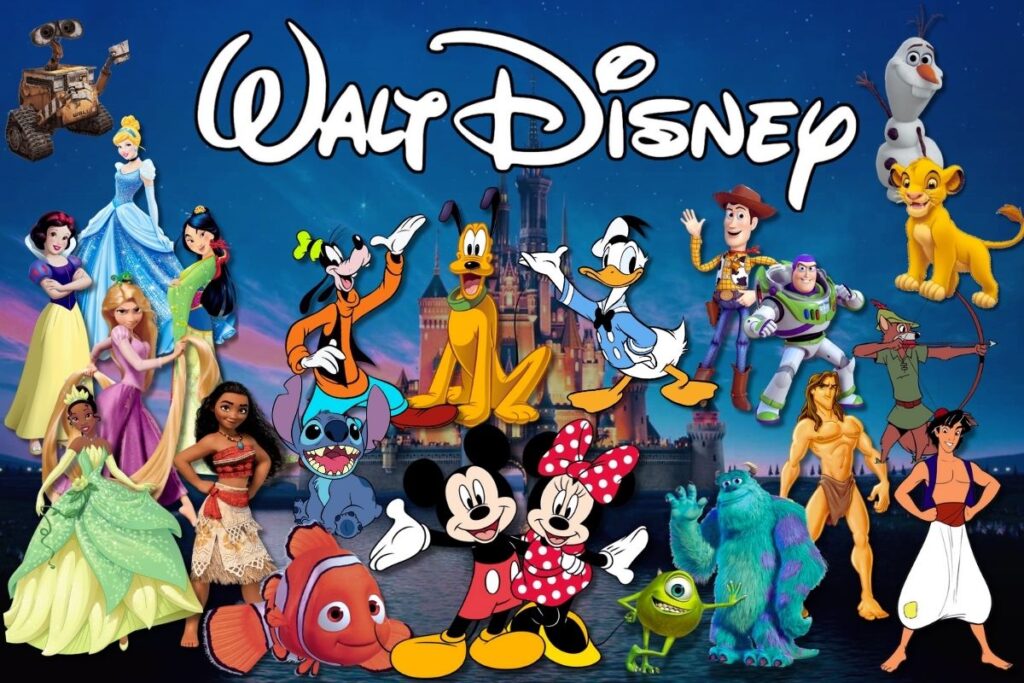
Mickey’s charm wasn’t just his design; it was his personality. He represented optimism and joy during difficult times, especially during the Great Depression. His adventures, full of humor and heart, brought laughter to millions. Alongside him came other beloved characters like Minnie Mouse, Donald Duck, Goofy, and Pluto — forming the core of the Disney family that remains popular nearly a century later.
These early Disney creations laid the foundation for the studio’s approach to character design: expressive animation, strong personalities, and universal themes that could resonate with any audience, regardless of language or culture.
Expanding the Kingdom: The Disney Princess Era
One of Disney’s most enduring contributions to storytelling is the Disney Princess franchise. It began with Snow White and the Seven Dwarfs in 1937, Disney’s first full-length animated feature and a groundbreaking moment in cinema history. Snow White became a symbol of innocence and kindness, teaching generations that purity of heart could overcome any evil.
Over time, the princess lineup expanded to include Cinderella, Aurora, Ariel, Belle, Jasmine, Pocahontas, and Mulan — each representing different cultures, strengths, and dreams. The modern era introduced new faces like Tiana from The Princess and the Frog, Rapunzel from Tangled, Merida from Brave, Moana, and of course, Elsa and Anna from Frozen.
These characters have evolved beyond traditional “princess” roles. Where early Disney heroines were often defined by beauty and romance, modern ones stand for independence, adventure, and leadership. They show young viewers that bravery, curiosity, and self-belief are as important as love or destiny.
The Villains We Love to Hate
Every great hero needs an unforgettable villain, and Disney has crafted some of the most memorable in cinematic history. Maleficent, Scar, Ursula, Hades, and Cruella de Vil stand out not just for their wickedness, but for their flair and style. These villains are entertaining because they represent exaggerated versions of human flaws — greed, jealousy, and pride — portrayed with dark humor and charisma.
In recent years, Disney has reimagined some of these characters, turning them into complex figures rather than pure evil. The Maleficent films, for instance, gave depth and backstory to the classic villain, showing her side of the story and transforming her into a misunderstood antihero. This shift reflects how audiences today crave more layered storytelling, where even villains can show shades of humanity.
Pixar’s Influence: New Dimensions of Emotion
When Disney partnered with Pixar Animation Studios, a new chapter began in the evolution of Disney characters. Pixar brought emotional depth, realism, and modern themes that resonated with all age groups.
Characters like Woody and Buzz Lightyear from Toy Story explore friendship and the fear of being forgotten. Nemo and Dory from Finding Nemo teach lessons about family and resilience. Lightning McQueen from Cars shows how success means little without humility.
Pixar’s storytelling style, combined with Disney’s heart, created characters that feel deeply human despite being toys, fish, or monsters. The blend of humor, philosophy, and emotional truth made audiences laugh and cry — often within the same scene.
The Rise of Modern Disney Heroes
The 21st century brought a fresh wave of Disney characters designed for a new generation. These figures reflect today’s values — inclusion, diversity, and emotional honesty.
In Frozen, Elsa struggles with self-acceptance and the fear of being different, while Anna demonstrates unshakable loyalty and optimism. Moana highlights courage and leadership, proving that heroes can emerge from any culture or gender. Encanto introduced the Madrigal family, each member gifted with unique powers but united by love and imperfection. Mirabel, the protagonist, showed that not having powers doesn’t mean you’re powerless — a message that resonated with millions worldwide.
Disney’s modern heroes no longer follow the traditional “rescue and romance” formula. Instead, they deal with identity, purpose, and emotional growth, making them relatable to both kids and adults.
How Disney Characters Shape Culture and Identity
Disney’s characters extend far beyond the screen. They influence fashion, language, art, and even social movements. Mickey’s silhouette is one of the most recognizable icons on the planet. Disney princesses inspire children’s costumes, theme park experiences, and even academic discussions about gender representation.
The company’s ability to evolve its characters with time has kept them relevant for almost a century. As society changes, so does Disney’s storytelling. For instance, Frozen and Moana focus less on romantic love and more on self-discovery and family bonds, aligning with the values of modern audiences.
Moreover, Disney characters have become emotional touchstones for many people. They remind us of childhood innocence, shared family moments, and the power of imagination. Whether it’s a parent introducing The Lion King to their child or a grown-up revisiting Aladdin, these stories serve as bridges between generations.
The Art of Bringing Characters to Life
One reason Disney characters feel so real is the studio’s dedication to animation as an art form. Each movement, gesture, and facial expression is carefully designed to convey emotion. Early animators studied animal behavior, human anatomy, and acting techniques to bring authenticity to every frame.
Voice actors also play a crucial role. The warmth of Robin Williams’ Genie, the regal tone of James Earl Jones’ Mufasa, and the playful charm of Tom Hanks’ Woody demonstrate how performance breathes life into animation.
Today, technology has made it possible for Disney to blend animation with realism. Films like Frozen II, Zootopia, and Raya and the Last Dragon feature characters that move and emote with astonishing detail, yet still retain the hand-drawn warmth of classic Disney storytelling.
Why Disney Characters Endure Through Generations
The secret to Disney’s timeless appeal lies in emotional truth. No matter how fantastical the setting — talking animals, enchanted castles, or space adventures — the emotions at the core of every story are deeply human. Love, loss, courage, friendship, and forgiveness are universal experiences that never go out of style.
Disney also understands the power of nostalgia. Revisiting beloved characters through sequels, reboots, and theme park attractions keeps the magic alive. At the same time, new generations discover their own heroes, ensuring the Disney legacy never fades.
Conclusion: The Magic Lives On
From Mickey Mouse to Moana, Disney characters represent the evolution of storytelling, creativity, and emotion. They remind us that imagination has no limits and that goodness, even in the darkest moments, always finds a way to shine.
Whether they make us laugh, cry, or believe in magic again, these characters are part of something larger than entertainment — they are part of who we are. The world may change, but as long as there are dreamers, the magic of Disney and its unforgettable characters will continue to inspire hearts for generations to come.