In today’s fitness world, few tools are as versatile and effective as the core ball. Also known as a stability ball, exercise ball, or Swiss ball, this simple piece of equipment can transform your workouts by improving your strength, balance, posture, and flexibility. Whether you’re a beginner or a fitness enthusiast, the core ball can help you achieve better results without putting too much stress on your body.
What Is a Core Ball?
A core ball is a large, inflatable exercise ball made of durable, anti-burst material. It’s designed to support the body during various workouts, especially those that target the core muscles—the abs, lower back, hips, and pelvis.
The concept of the exercise ball originated in the 1960s when physical therapists in Switzerland began using it for rehabilitation exercises. Since then, the tool has evolved from medical use to mainstream fitness training.
Core balls come in different sizes, typically ranging from 45 cm to 85 cm in diameter, depending on your height and the type of exercise you’re performing.
Benefits of Using a Core Ball
Using a core ball regularly offers a wide range of health and fitness benefits. It engages multiple muscle groups simultaneously, improving overall coordination and balance.
1. Strengthens the Core Muscles
The core ball requires constant balance, which automatically activates your abdominal muscles, lower back, and obliques. Every movement you make on the ball challenges your stability, leading to stronger and more defined core muscles.
2. Improves Posture and Alignment
One of the major benefits of training with a ball is improved spinal alignment. Because your body has to stay balanced on an unstable surface, your posture naturally improves. Many people even use core balls as office chairs to strengthen back muscles and reduce slouching.
3. Enhances Flexibility and Mobility
Stretching on a ball helps lengthen the muscles and improve flexibility, especially in the spine and hips. It’s also excellent for warming up or cooling down after intense workouts.
4. Increases Stability and Balance
Every exercise you do on the ball—whether it’s planks, bridges, or crunches—requires constant engagement of stabilizer muscles. This enhances balance and coordination, which benefits athletes, dancers, and anyone who wants to move more efficiently.
5. Reduces the Risk of Injury
Since core ball exercises engage the body’s stabilizing muscles, they improve your ability to maintain balance and prevent falls or strains during other physical activities. It’s also a low-impact way to strengthen joints and ligaments safely.
How to Choose the Right Core Ball
Choosing the right size core ball is crucial for comfort and effectiveness. The general rule is that when you sit on the ball, your knees should be at a 90-degree angle.
Here’s a simple size guide:
- 45 cm ball – Suitable for people under 5 feet tall
- 55 cm ball – Best for heights between 5’1” and 5’7”
- 65 cm ball – Ideal for 5’8” to 6’1”
- 75 cm ball – For those taller than 6’2”
When buying, make sure the ball is made from anti-burst PVC material and can support your body weight safely. Many modern versions come with non-slip surfaces for added safety.
Effective Core Ball Exercises
Here are some of the best exercises you can do with a ball to strengthen your entire body.
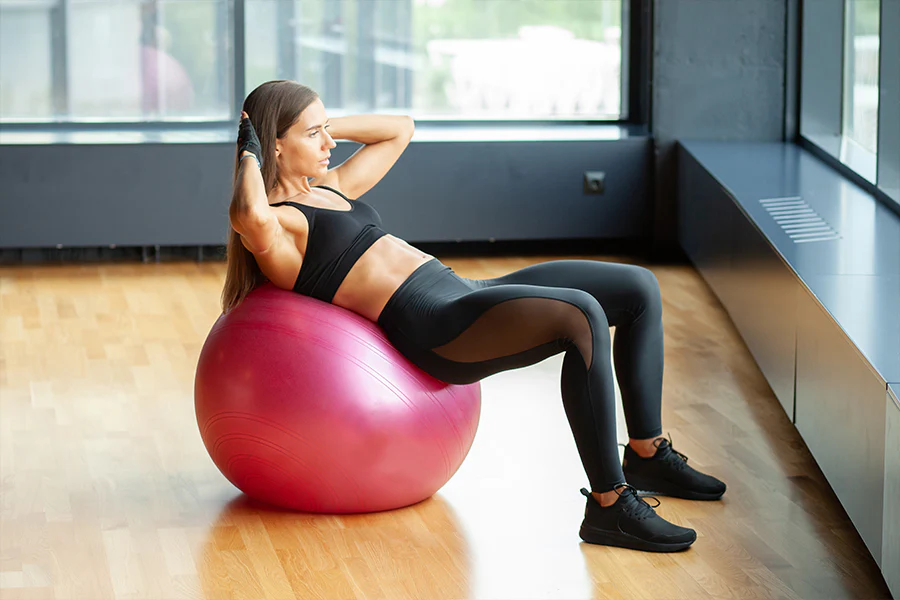
1. Ball Crunch
Lie on the ball with your lower back supported, feet flat on the ground, and hands behind your head. Perform crunches by engaging your abs and lifting your upper body.
2. Plank on Ball
Place your forearms on the ball and extend your legs behind you. Keep your body in a straight line while holding the plank position. This move intensifies your regular plank and boosts core stability.
3. Wall Squat with Core Ball
Place the ball between your lower back and a wall. Slowly lower your body into a squat position, keeping the ball rolling along your back. This strengthens your thighs and improves posture.
4. Ball Bridge
Lie on your back with your feet on the ball. Lift your hips off the ground to form a straight line from shoulders to knees. This targets your glutes, hamstrings, and lower back.
5. Pike Roll-Out
Start in a plank position with your shins on the ball. Use your core to pull the ball toward your chest by raising your hips, forming a pike position. Slowly return to the starting position.
Core Ball in Physical Therapy and Rehabilitation
The core ball is not just for fitness enthusiasts; it’s also a key tool in physical therapy. Therapists use it to help patients regain strength, coordination, and flexibility after injuries.
For people recovering from lower back pain or joint issues, the ball provides a controlled, low-impact environment to perform gentle exercises safely. It’s also used in prenatal fitness, as it helps pregnant women improve balance and relieve back tension.
Using the Core Ball for Office Work
Surprisingly, the core ball has found its way beyond the gym—into offices and workspaces. Sitting on a ball instead of a chair encourages active sitting, forcing you to engage your core muscles constantly.
While it’s not meant to replace an ergonomic chair entirely, using a core ball occasionally can:
- Improve posture
- Strengthen back muscles
- Increase focus and alertness
However, it’s best to limit sitting sessions to 30–60 minutes at a time to avoid strain.
Common Mistakes to Avoid
Although the ball is user-friendly, many people make small mistakes that reduce its effectiveness or increase injury risk.
Here are a few to watch out for:
- Incorrect sizing: Using a ball that’s too big or small affects balance and posture.
- Poor form: Arching the back or overextending can cause strain.
- Overinflating: This makes the ball too hard and unstable.
- Skipping warm-up: Always stretch before using the ball to prevent muscle tension.
Core Ball Workouts for Different Fitness Levels
Beginners
Start with simple exercises like seated balance holds, wall squats, and gentle crunches. Focus on form and breathing.
Intermediate Users
Add planks, bridges, and push-ups using the ball for greater challenge and instability.
Advanced Athletes
Combine ball exercises with weights or resistance bands to increase difficulty and engage more muscle groups.
The beauty of the core ball is that it grows with your progress—you can always modify workouts to suit your strength level.
Maintaining Your Core Ball
To extend the lifespan of your ball:
- Store it in a cool, dry place, away from sharp objects.
- Avoid placing it on rough or hot surfaces.
- Check the inflation regularly; it should feel firm but not rock-hard.
High-quality core balls can last for years with proper care.
The Core Ball as a Lifestyle Tool
Beyond the gym, using a core ball encourages a more active, balanced lifestyle. It trains your body to move efficiently and with better control. Whether you’re working out at home, doing yoga, or recovering from an injury, this single tool can help you achieve a stronger and healthier body.
It’s affordable, portable, and suitable for all ages, making it one of the most practical pieces of fitness equipment available today.
Conclusion
The core ball is far more than a simple gym accessory—it’s a gateway to better strength, balance, and posture. With consistent use, it helps tone your body, protect your spine, and improve daily movement.
Whether you’re looking to sculpt your abs, prevent back pain, or just stay active at home, incorporating a core ball into your routine can make a huge difference. It proves that sometimes, the simplest tools deliver the most powerful results.