Introduction A Story That Begins Inside The Gym
The iron gym doors closed behind me with a familiar echo. Chalk dust floated in the air like quiet motivation. I had trained for months yet every heavy pull ended the same way. My grip failed before my muscles did. That frustration became the start of a powerful lesson. This article tells a real gym story while teaching how to use lifting straps correctly and safely. You will not just read instructions you will feel the journey of growth strength confidence and control with every lift.
The Day Grip Strength Became The Enemy
Understanding The Limitation
Every lifter reaches a point where hands give up before the body. Deadlifts rows shrugs all suffer when grip becomes the weak link. I watched stronger lifters move heavy weight smoothly while my bar slipped. That moment forced me to search for a solution without cheating my progress.
Discovering Lifting Straps
A training partner noticed my struggle and handed me a pair of worn straps. He said these are tools not shortcuts. That sentence changed everything. Learning how to use lifting straps became the next chapter in my lifting story.
What Lifting Straps Really Are
More Than Just Fabric
Lifting straps are supportive training tools designed to wrap around the wrist and barbell. They help secure the bar allowing the lifter to focus on the target muscles rather than grip fatigue.
Common Types Lifters Encounter
Some straps are loop style while others are figure eight design. Each serves the same purpose but fits different lifting styles. The choice depends on comfort control and training goals.
Why Lifters Choose To Train With Straps
Focusing On Muscle Not Grip
When grip strength limits performance it can prevent muscle growth. Straps remove that barrier so the back legs and traps can work fully.
Training Heavier With Better Control
With proper strap use heavier loads feel more stable. This improves confidence and reduces unnecessary strain during pulling movements.
The Early Days of Struggle
When Grip Becomes the Constraining Factor.
All hardcore lifters can recall how, at one point, the bar has become heavier, not due to the weakness of the muscles, but the inability of the hands to grasp on to it. Pull days ended early. Deadlifts stalled. Rows felt rushed. The body wanted more, but the grip said stop. This frustration often pushes lifters to search for solutions beyond chalk and hope.
Discovering Lifting Straps
Lifting straps appear simple, almost unimpressive. A strip of strong fabric, looped with intention. Yet their purpose is powerful. They enable the hands to remain attached to the bar in instances when the grip strength falls behind the muscular potential. The knowledge of how to put lifting straps on correctly turns it into a crutch rather than a strategic training aid.
Learning step by step technique.
Preparing the Strap
Chair straps should be adjusted. It has to be a loop that fits comfortably around the wrist without digging into the flesh. The tail should be floppy and should be able to be wrapped.
The bar with control wrapped.
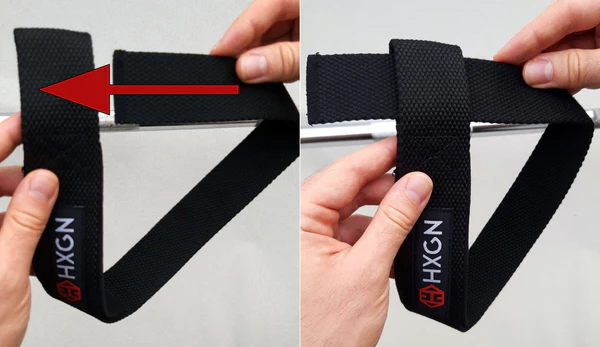
Take the strap tail and put it below the bar and then go over and around and turn the bar towards the body to tighten. The bar must not be hanging, but like a part of the hands.
Proper position of the wrist.
It is necessary to have neutral wrist positioning. Do not bend or twist abnormally. A correct position of the wrist is a precaution that provides security and transfer of the force during heavy pulls.
Some of the pitfalls on the way.
Over Reliance on Straps
One of the biggest errors is using straps for every set. Grip strength still needs training. Straps should assist, not replace natural grip development.
Incorrect Wrapping Technique
Loose wraps lead to slipping. Over tight wraps reduce control. Balance comes from practice and awareness.
Ignoring Sensory Feedback
Signs include pain, numbness, or discomfort. Respect them. Adjust technique rather than pushing blindly.
The Mental Shift That Comes With Mastery
Trusting the Tool
Once technique improves, lifters stop fearing heavy pulls. They trust the connection between body, strap, and bar. Training on the usage of lifting straps less involves mechanics and more confidence.
Focusing on Target Muscles
Attention shifts to contraction of muscles, rhythm, and breathing when grip stress is lessened. Exercises are more meaningful and productive.
Integrating Straps Into a Balanced Program
Strategic Use During Training Cycles
Straps work best when paired with grip focused sessions. Alternate strap assisted days with raw grip work to build both strength and endurance.
Listening to the Body
Every lifter progresses differently. Adjust strap usage based on recovery, goals, and performance feedback.
Long Term Benefits of Proper Strap Use
Better Retention of Training.
Lessening the grip fatigue decreases risk of injury and stress of the joints. This allows consistent training over longer periods.
Breaking Strength Plateaus
When grip is no longer the weakest link, true strength potential surfaces. Progress resumes with renewed motivation.
How To Use Lifting Straps Step By Step In A Real Workout
Preparing Before The Lift
The straps should be arranged before touching the bar. Pass the strap through the loop until you can have it around your wrist. The loose end is to be at the palm side.
Wrapping The Bar With Control
Lay your hand on the bar and take a loose strand of the strap and put it under and over. Turn the bar a little in order to tighten the strap. This will fix your grip without restricting circulation.
Locating The Ideal Snugness.
The strap must not be too tight but it must not be sore. You are still feeling the bar in your palm. The important factor in safe and efficient lifting is comfort.
Implementing The Lift Confidently.
Once wrapped grip the bar firmly and lift as usual. Focus on posture breathing and muscle engagement. The strap supports the grip not the technique.
The First Successful Heavy Deadlift With Straps
Feeling The Difference
That first pull felt different. The bar stayed locked in my hands. My back engaged fully. No slipping no panic just pure controlled power.
Confidence Changed Everything
Confidence transforms performance. Knowing the bar would not slip allowed me to push safely and effectively. That moment marked progress not dependence.
The Major Fallacies Novices commit with Straps.
Wrapping Too Tight
Excessive tightness may result in a blood cut and pain. This does not enhance performance but instead it lowers the performance.
Using Straps Too Early
Straps are tools not replacements for grip training. Beginners should still develop natural grip strength alongside strap use.
Ignoring Proper Form
Straps do not protect against poor technique. Even with the support, bad posture still can be hurtful.
Using Lifting Straps: When and When Not.
Supreme Exercises To Use Straps.
Strap support is very good in deadlifts heavy rows rack pulls shruds and lat pulldowns.
Exercises No straps required.
Curls presses and light accessory work usually do not require straps. Grip engagement is part of those movements.
Balancing Grip Strength And Strap Training
Training Grip Separately
Farmer carries hangs and thick bar training help build grip strength. These should complement strap assisted lifts.
Smart Programming For Long Term Gains
Using straps only on top sets allows grip to develop naturally during warm ups. This balance prevents reliance.
Mental Growth Through Proper Equipment Use
Removing Ego From Training
Using straps taught me that smart training beats ego lifting. Progress comes from understanding limitations and solving them wisely.
Respecting The Journey
Every tool has a purpose. Learning how to use lifting straps responsibly showed me maturity in training.
Safety Tips Every Lifter Should Remember
Check Strap Condition Regularly
Worn or torn straps can fail under load. Always inspect before lifting heavy.
Maintain Wrist Comfort
Adjust position if pain occurs. Straps should support not injure.
Stay Present During Every Rep
Never rely fully on straps. Stay focused and controlled throughout the lift.
Conclusion
Lifting straps did not make me weaker. They made me smarter. Learning how to use lifting straps taught patience awareness and balance. They allowed my larger muscles to grow while my grip caught up through separate training. The real value was confidence and control not just heavier numbers. When used correctly straps support progress without replacing fundamentals. They are not shortcuts but companions on the strength journey. Every lifter faces limits and overcoming them requires tools knowledge and respect for the process. Train hard train smart and let every lift tell a story of growth.